


Every association marketer knows the feeling of staring down an annual conference goal and wondering how much of it will actually come from the plan you wrote in January versus the scramble that happens in the final six weeks.
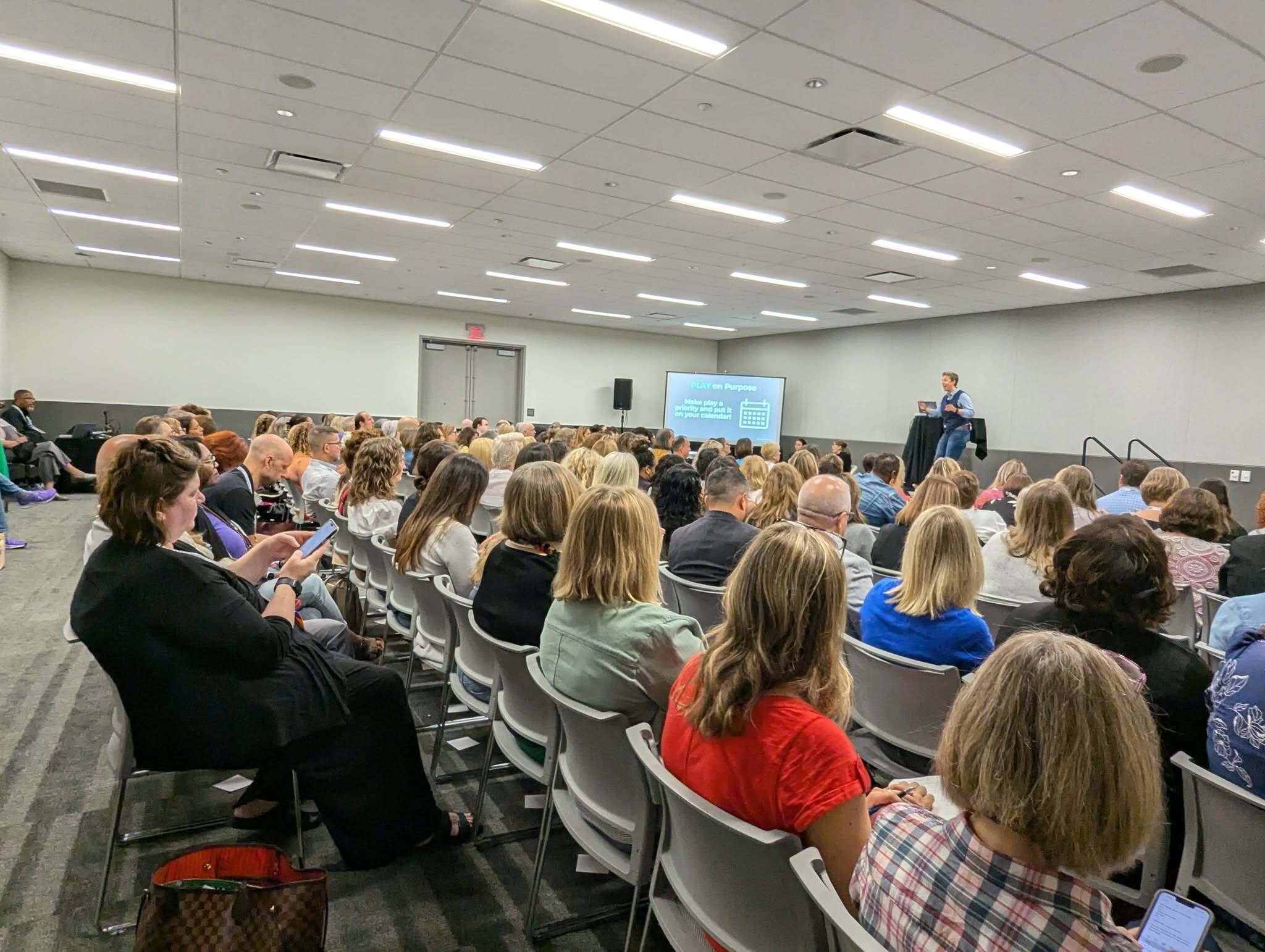
Here's what that looks like in practice, using ASAE's approach to its own annual meeting (one of the association world's biggest events, drawing roughly 5,000 to 6,000 attendees) as a working example. ASAE runs this strategy through Feathr, and the campaign data behind it offers a useful look at what actually drives registrations versus what just feels productive.
Start earlier than feels necessary
ASAE's team begins working on next year's annual meeting almost the moment this year's event closes. For an August conference, that means a planning runway of around 10 months, with ideas for the following year already in motion before the current one even happens.
That length of runway isn't just about having more time to get things done — it changes what's possible strategically. A longer cycle means more room to test messaging, compare it against historical data, and see what actually moves registrations versus what just feels like it should.
It also means more flexibility to shift budget in real time: if one campaign is converting well, you can pour more into it while it's still running, and if something isn't landing, you can pull back before you've wasted the spend.
The milestones along that runway tend to follow a natural rhythm: early bird pricing to reward the people who'll attend no matter what, keynote and entertainment announcements to create a bump in attention, and a steady cadence of reminders about the sessions, receptions, and credentialing opportunities that make the event worth the time and budget.
For audiences like CEOs and executive directors, that messaging often needs its own track entirely, built around what matters to that specific group rather than general event hype.
Here’s the practical upshot: if you're starting promotion two or three months out, you likely don't have the luxury of holding back big announcements for a slow reveal. The longer your timeline, the more you can be strategic about pacing, rather than just getting everything out the door before time runs out.
Keep the message moving, not just the timeline
Starting early solves some problems, but it can create a new problem of its own: banner blindness. Running the same ad or sending the same email repeatedly for months will eventually stop registering with people, even if the offer underneath it is strong.
Luckily the fix isn't complicated — rotate creative, test different angles (an early-bird discount message performs differently than a save-the-date announcement, which performs differently than a last-chance push), and treat each campaign as a chance to learn something.
Tracking cost per conversion across campaigns makes this concrete. If an early-bird campaign that once converted cheaply starts costing more per registration, that's a signal worth investigating, not just a number to shrug off.
.jpg?width=326&height=271&name=Mdjzos4LRjuqUZa1xWtG_transformed_300x250%20(3).jpg)
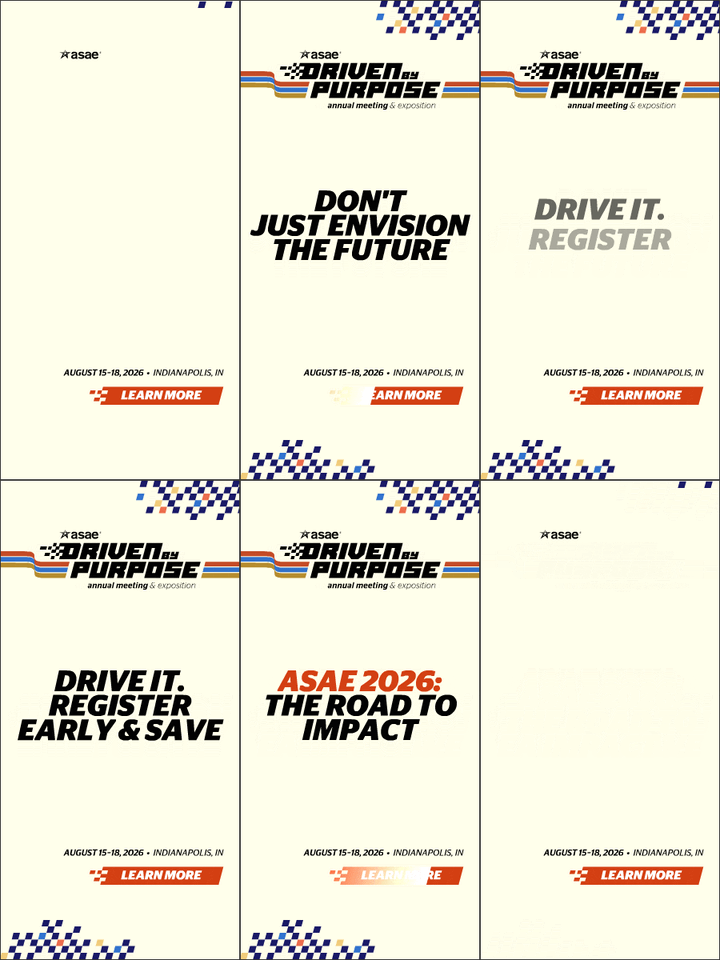
Early bird and cart abandonment ads from ASAE's 2026 Annual Meeting campaign
This is also where having a real dashboard pays for itself. Rather than waiting until the event is over to find out what worked, marketers can watch performance as campaigns run and act on it immediately: add budget to what's converting, cut what isn't, and swap creative before a wave of registrations is lost to fatigue.
Not everyone converts the same way, and that's useful
One of the more interesting shifts in event marketing is thinking less about "the audience" as a single group and more about the different decision-making patterns within it. Three types show up again and again:
- The planner. Pays attention early, reads the agenda as soon as it's out, and often registers well ahead of the deadline, though not always immediately. They need to see consistency over months, not just one strong announcement.
- The straggler. Fully aware the event exists, genuinely wants to attend, but registers right at the deadline, usually prompted by urgency messaging or a last-chance email.
- The executive. Often needs a distinct messaging track entirely, built around leadership-specific content and sessions rather than general conference hype.
Nobody fits neatly into one bucket all year. The same person might be a planner this year and a straggler next year depending on what else is going on in their world.
The value of thinking in these terms isn't about labeling people, it's about recognizing that a single generic campaign can't serve all three well, and that behavior-based retargeting (showing someone a different message depending on what they've actually done, like visiting the registration page without converting) is what lets one overall campaign actually speak to all of them.
Retargeting is the part most organizations underuse
If someone visits your registration page and leaves without signing up, that's not a dead end — it's a signal. A simple tracking pixel on that page (and on your membership page, your event page, really anywhere you want someone to take an action) lets you follow up with ads specifically aimed at people who've already shown intent, rather than broadcasting to everyone equally.
The difference in results between a broad awareness campaign and a targeted "registration dropout" campaign can be significant. In ASAE's case, general messaging campaigns averaged around $20 per conversion and roughly $60 in value for every dollar spent. A more targeted registration-dropout campaign, aimed only at people who'd already visited the registration page, returned closer to $98 for every dollar spent.
That gap makes sense once you think about it: someone who already looked at your registration page has shown far more intent than someone encountering your event for the first time, and the cost to convert them reflects that.
Across all of its Feathr campaigns combined, ASAE found that roughly 15% of its eventual registrants had touched one of these retargeting campaigns at some point in their journey. Not necessarily the final nudge that got them to register, but part of the path. That's a meaningful number for a tactic that runs largely in the background once it's set up.
Awareness doesn't have to live only online
Geofencing extends this same logic into the physical world. By targeting mobile devices based on location, associations can reach people who were at a relevant place, whether that's a competitor's conference, an industry trade show, a cluster of employers in their field, or even their own past events.
One particularly clever use of this: geofencing an association's own event to promote something else afterward. ASAE did this with attendees of one of its own events, using the fact that those people's phones had physically been in that space to later serve them ads promoting a relevant certification.
It's a simple idea, reach people who already showed up once, with a next, related ask, but it requires the infrastructure to actually act on that data instead of letting it go unused.


Geofencing ads ASAE served to attendees of their own event
Yes, you can still reach younger audiences
A common worry among association marketers is whether the membership model still resonates with younger professionals who have endless free resources, YouTube tutorials, and online communities competing for their attention.
The honest answer is that the perception of total disengagement doesn't match what's actually happening. Surveys of younger professionals consistently show real interest in networking, credentialing, and structured professional development, the exact things associations are built to provide. The trades, in particular, are seeing a notable influx of younger talent, which is a meaningful opportunity for trade associations specifically.
What changes isn't the value proposition, it's where and how that value gets communicated. If a younger audience is less responsive to direct mail or more active on different platforms, that's a targeting question, not a sign the underlying offer has stopped mattering.
The associations seeing real traction here tend to be intentional about two things: making sure younger attendees feel a genuine sense of belonging once they're in the room (not just invited to it), and backing that up with real investment, such as dedicated leadership programs or scholarships that remove the cost barrier to attending in the first place.
Turning your own audience into sponsor revenue
Here's where event marketing stops being just a cost center and starts paying for itself. The same website visitors generating all this first-party data, people who came to your registration page, your sponsor pages, your event site, are exactly the audience your sponsors and exhibitors are already paying to reach through logos, tablecloths, and banner placements at your event.
Sponsored retargeting takes that same tracking infrastructure and extends it on a sponsor's behalf. A supplier whose product is relevant to your industry, say, a company selling filtration systems or industrial equipment, can have their ads shown specifically to the people who visited your site looking for exactly that kind of solution.
It's the same mechanism as any other retargeting campaign; the audience is just being made available, for a price, to a sponsor instead of being used solely for your own event promotion.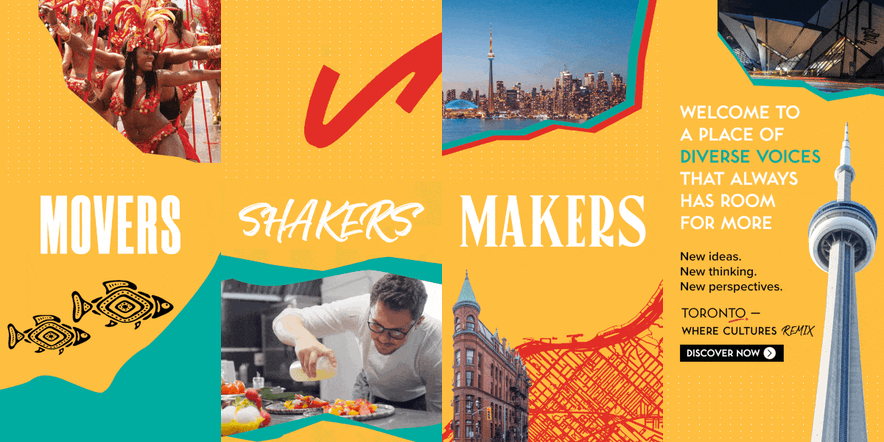
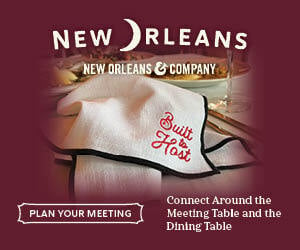
Examples of ads ASAE runs on behalf of sponsors in Feathr
This is often an easier sell than marketers expect. Most sponsors are already running some form of digital retargeting elsewhere, so the pitch isn't explaining a new concept, it's explaining why your association's first-party audience data is more valuable than whatever broader targeting they're buying through Google or elsewhere.
It can also be bundled directly into existing sponsorship packages (adding a set number of geofenced impressions around your event to an existing table sponsorship, for instance) as a way to give sponsors something more tangible and trackable without necessarily changing what you charge.
The common thread
None of this requires reinventing event marketing from scratch. It requires treating your website and event pages as a source of real signal, starting early enough to act on what that signal tells you, and resisting the urge to run one generic campaign for an audience that actually behaves in several distinct ways. Done well, this doesn't just fill seats — it turns your existing sponsorship relationships into a more valuable (and more measurable) asset, too.
For a closer look at how this played out across ASAE's actual campaigns, along with more of the audience Q&A on budget-making and timeline specifics, the full session recording is available to watch.