


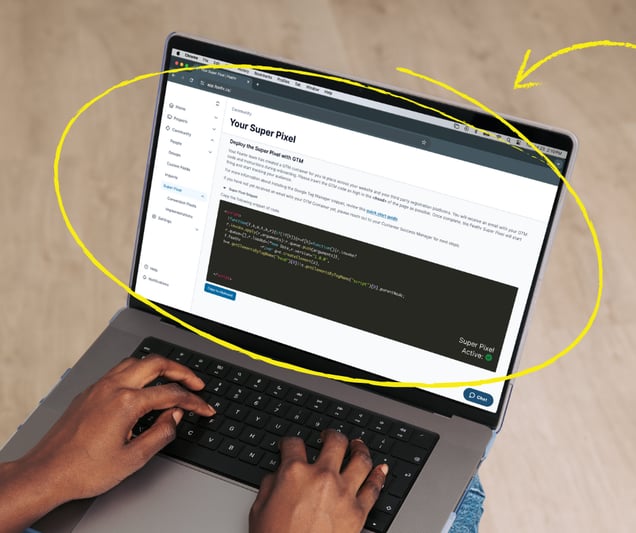
What is a Super Pixel, you ask? Only the best way to get to know your ideal audience, whether that audience is made up of donors, members, attendees, sponsors, or all of the above. It lets you follow up with people wherever they go online and remind them why they connected with your organization in the first place.
To be more precise: the Super Pixel is a snippet of tracking code that, once it's placed across your website, shows your team who is engaging with your content and what they're doing there.
That includes your anonymous visitors. Knowing how people move through your site matters, even for the first-timers who haven't decided whether to give, join, register, or renew.
Why call these people your ideal audience? Because they're already your audience. Everyone the Super Pixel tracks has come to your website on purpose. Maybe they read about your mission, priced out a membership tier, or checked the dates for your annual conference. They didn't wander in by accident.
Competing for attention keeps getting harder, so the smartest move is to engage the people who are already looking for you.
What is the Super Pixel?
We won't get deep into the code or how it fires when someone lands on your URL. If you want the technical walkthrough, watch this Feathr video on the Super Pixel or follow the step-by-step setup guide.
With all the talk about cookies in the last couple of years, one clarification: the Super Pixel isn't a cookie, though it currently uses cookies to remember key details about your visitors.
When you follow General Data Protection Regulation (GDPR) guidelines, your visitors get to opt in or out of those cookies. That respects their choice about how their information is used. It also shows you who is open to hearing from you, whether they're a prospective donor, a lapsed member, or a first-time conference attendee.
Why web tracking matters, no matter your goal
Your goal might be donations, new members, renewals, event registrations, sponsorship sales, or course enrollments. The underlying truth is the same: good marketing runs on good data, and what you know about your audience should shape every campaign you launch.
Rather than overpaying for third-party data, build your own from the people you actually want to reach. That's first-party data. Third-party data still has its place, such as audience expansion campaigns, but nearly every nonprofit and association benefits from collecting its own.
Why first-party data is so valuable
First-party data comes straight from the source. For a nonprofit, that might mean donation amounts and frequency, volunteer history, or survey answers. For an association, it could be membership tier and renewal date, event attendance, certifications earned, or committee involvement. For both, it includes contact details and, crucially, what people do on your website.
Because you know exactly where it came from, you can trust it enough to act on it. And it describes the people who matter most: the supporters and members who keep your organization moving.
Anonymous visitors still count
What about people who opt out of sharing their information? The Super Pixel still captures the basics: which pages they viewed and how long they stayed. Someone who spent four minutes on your membership benefits page is telling you something, even without a name attached.
In Feathr, you can serve ads to those anonymous visitors across the web, knowing they were interested enough to find you.
It costs less, too
Collecting data yourself is cheaper than buying it, which frees up budget for the campaigns themselves. More valuable data at a lower cost is a rare win-win.
For nonprofits: turning visits into year-round giving
A tracking pixel earns its keep all year, but it's especially powerful when traffic spikes, like GivingTuesday and the final weeks of December.
That's when communities rally around your cause, and it would be a shame not to greet them as they walk through your digital front door. Your cookie banner won't literally ask for their name and offer an impact story by email, but if they share their information, that's exactly the follow-up you should send.
People researching your mission during giving season may not become major donors overnight. With thoughtful follow-up via ads and a well-timed email, though, there's no telling what they could become.
For associations: from browsing to belonging
Associations have their own peak moments, and each one shows up in your web traffic first. The Super Pixel lets you spot interest and act on it before it fades.
- Membership recruitment. A prospect who visits your join page twice but never checks out is ready for a nudge. Retarget them with ads that highlight member benefits, or send an email that answers the questions they likely had.
- Renewal season. Members who start browsing again ahead of their renewal date are signaling intent. Members who've gone quiet are signaling risk. Both deserve a different message, and web activity tells you which is which.
- Annual meetings and conferences. Registration windows are your GivingTuesday. Track who views the agenda, speakers, or pricing pages, then follow up before early-bird rates expire.
- Sponsors and exhibitors. Companies browsing your prospectus or exhibitor pages are warm leads. Pixel data helps your team prioritize outreach and show sponsors the engaged audience they're buying access to.
- Education and certification. Visitors exploring courses, CE credits, or certification programs can be guided toward enrollment with timely reminders.
The pattern is the same as in fundraising: the people already on your website are the ones most likely to act. Listening to what they do there is how you know what to say next.

How to Super Pixel
Yes, Super Pixel is a noun. Given how much it can do for your organization, we think it deserves to be a verb too. Putting it to work takes three steps:
- Install the code across your website and confirm the Super Pixel is firing on every page, including donation forms, join and renewal pages, and event registration.
- Learn about the people visiting your site and what they're interested in.
- Reach them wherever they go online with retargeting ads or automated emails.
Retargeting ads keep your organization in front of people who have already shown interest. Automated email takes the guesswork out of timing, so your message lands when someone is ready to give, join, renew, or register.
The best marketing starts with listening. Online, that means paying close attention to how your audience behaves on your site. That's what the Super Pixel is for.
Start Super Pixeling today
You know the why and the how. What's stopping you from Super Pixeling ahead of your next big moment, whether that's year-end giving, renewal season, or conference registration?
Once insight about your audience starts to trickle in, then stream in, you'll be able to serve your community better. For nonprofits, that means more donations. For associations, that means more members, stronger retention, and fuller events. For both, it means more momentum and more impact.
The Super Pixel also powers conversion tracking. When someone donates, joins, renews, or registers, that action becomes another data point you can use to send more relevant messages from then on.
However you choose to start learning about your website visitors, start soon. If you'd like to see how easily your organization can begin collecting first-party data, book a personalized demo to watch the pixel in action.
Whatever you do, don't let that knowledge sit on a shelf. Use it to remind your community of the work you do every day, and to bring more people into it.
The best ad campaign to boost your nonprofit's donations

Combining digital and print advertising with Tracked Links